rv-park
Oak Plantation Campground
Johns Island, SC
Full-hookup RV resort about 15 minutes from downtown Charleston with monthly extended-stay sites and cottage rentals.
Tiny home zoning, permits, THOW parking, and builder costs in Charleston, SC. Historic-district review, flood-zone rules, and ADU pathways explained.
Last researched June 2026
Charleston is a humid subtropical coastal city with hot, humid summers, mild winters, and a long outdoor season. The historic peninsula, the barrier islands, and the Lowcountry marshes give tiny-home residents an unusually rich setting, but land values in the peninsula and East Cooper are among the highest in the Carolinas. Tourism, a strong port, and a growing tech corridor in North Charleston drive consistent rental demand. Hurricane season (June through November) and flood-zone insurance costs are real factors — elevated foundations and wind-load detailing add to build cost and insurance premiums for any new residential construction.
In Charleston, South Carolina, tiny homes on wheels (THOWs) are classified as recreational vehicles under state law and cannot be occupied full-time on standard residential lots inside city limits as of April 2026. Foundation-built tiny homes must comply with the South Carolina-amended IRC, including Appendix AQ for dwellings under 400 square feet, and obtain a building permit through the City of Charleston Department of Building Inspection Services. Charleston's peninsula and many East Cooper neighborhoods sit in DHEC Ocean and Coastal Resource Management (OCRM) flood and critical-area zones, which layer floodplain elevation, setback, and wind-load requirements on top of standard residential review.
As of April 2026, detached accessory dwelling units are allowed on qualifying single-family lots under Charleston's zoning ordinance, subject to lot-size, setback, and design standards. Properties inside Charleston's historic districts are additionally subject to Board of Architectural Review (BAR) design review, which materially affects scope and schedule for any new ADU or tiny home project. Permit fees vary with project valuation; review timelines typically run 8–14 weeks depending on BAR involvement and flood-zone complexity.
ADU standards are codified at Section 54-214 of the city's Chapter 54 zoning ordinance, which permits accessory dwelling units in all base zoning districts subject to the dimensional standards of the underlying district, as of June 2026. Verify current requirements with your local planning department before purchasing land or beginning construction.
Verify current requirements with your local planning department.
Detached ADUs on foundations are permitted on qualifying single-family lots in Charleston under the city's zoning ordinance, subject to lot-size, setback, height, and design standards. Inside the city's historic districts, ADUs also require Board of Architectural Review approval before a building permit can be issued, which typically adds 4–8 weeks to the schedule and imposes materials, massing, and window-pattern requirements drawn from the surrounding district's character. Short-term rental use of ADUs is heavily restricted under Charleston's short-term rental ordinance; most residential ADUs cannot be operated as Airbnb or VRBO rentals. THOWs do not qualify as ADUs in Charleston.
Communities, RV parks, and parking options in and near Charleston.
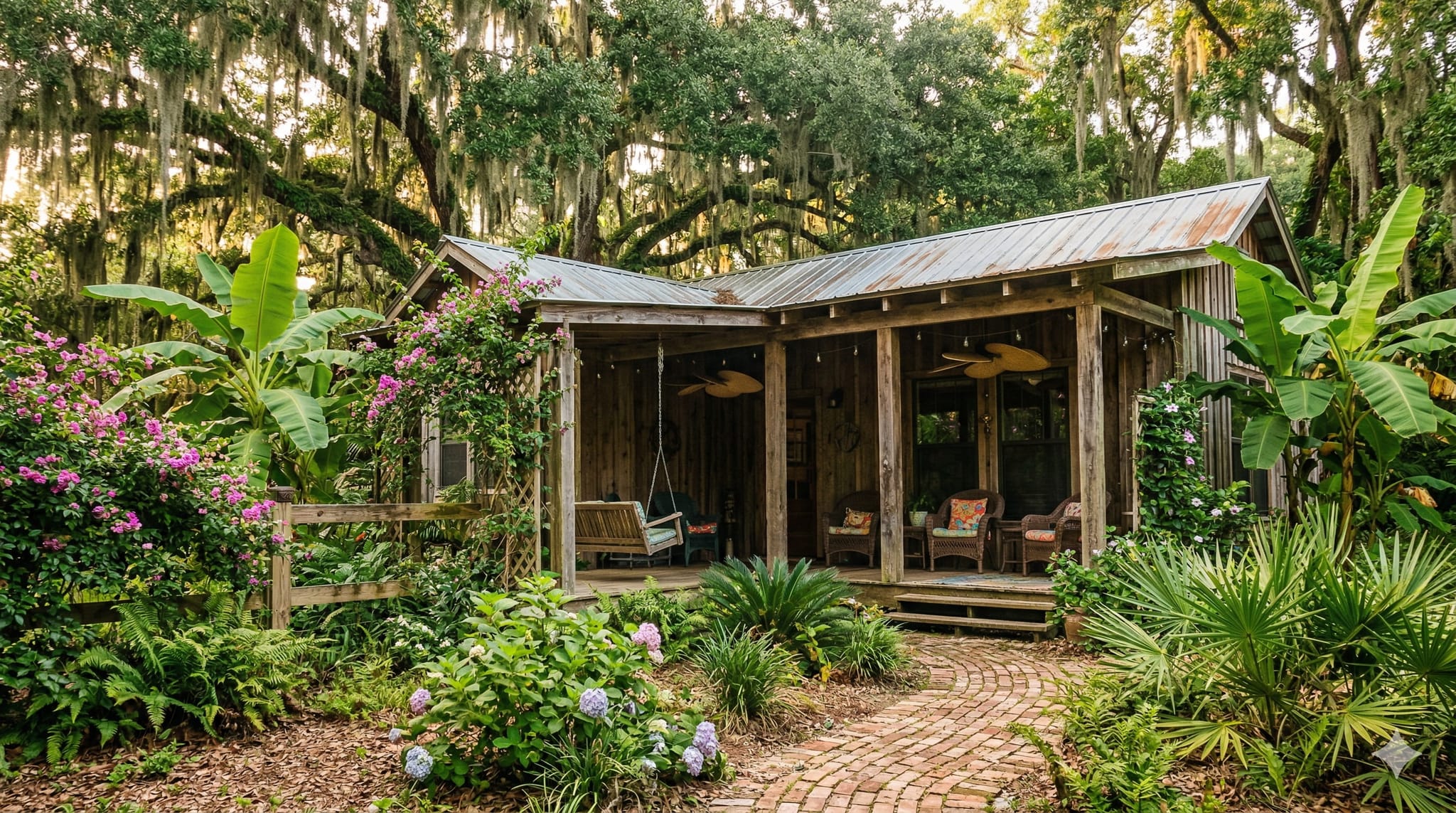
THOWs in Charleston must be sited in licensed RV parks or campgrounds for long-term stays; the city does not permit full-time THOW habitation on standard residential lots. Oak Plantation Campground on Johns Island offers monthly extended-stay sites with full hookups about 15 minutes from downtown, and Charleston KOA (Mount Pleasant side) offers extended-stay options close to the beach communities. Pine Ridge Campground in Summerville is the most common option for Charleston-area workers seeking long-term THOW siting at moderate monthly rates. Inside the city, the combination of historic-district rules, flood-zone review, and limited residential parcels means full-time THOW living on private lots is effectively not permitted without a variance.
rv-park
Johns Island, SC
Full-hookup RV resort about 15 minutes from downtown Charleston with monthly extended-stay sites and cottage rentals.
rv-park
Summerville, SC
Monthly RV park in Summerville popular with Charleston-metro workers seeking long-term THOW siting at moderate rates.
Spartanburg, South Carolina
Spartanburg, South Carolina ADU and tiny home builder operating as SC ADUs LLP. Specializes in stick-built detached and attached ADUs with full permitting support — they handle all permit filing so clients avoid the zoning and permitting process entirely. Active as of May 2026, with listings in the Upstate CREIA vendor directory and a Facebook presence under "Bradley Knapp Homes | Spartanburg SC."
Service areas: South Carolina
Berryville, Virginia
Berryville, Virginia THOW builder and workshop host run by Robin Hayes, a Green Advantage Certified Builder with over 40 years of construction experience. Offers custom-built tiny homes on wheels and hands-on build workshops held in Clarke County, VA each spring and fall. Serves Virginia and the broader East Coast, with delivery across the U.S. Custom builds range from approximately $30,000 for owner-assisted projects to $60,000 or more for fully built homes, as of May 2026.
Service areas: Virginia, Maryland, Washington DC, North Carolina, South Carolina, Georgia, Florida
Guin, Alabama
Guin, Alabama manufacturer of energy-efficient manufactured and modular homes, founded in 2004. Operates a 200,000-square-foot facility and has produced 15,000+ homes across 18 states. Offers a "Cozy Cabins" tiny-home line within its Signature series, built to HUD code or state modular standards. Member of the Alabama Manufactured Housing Association. Active as of May 2026.
Service areas: Alabama, Arizona, Arkansas, Florida, Georgia, Illinois, Indiana, Kentucky, Louisiana, Mississippi, Missouri, New Mexico, North Carolina, Oklahoma, South Carolina, Tennessee, Texas, West Virginia
Buford, GA
Mustard Seed Tiny Homes is a premium tiny house builder based in Buford, Georgia, serving North Carolina and the broader Southeast. They build both modular and park model tiny homes with models including The Dogwood, The Juniper, The Sycamore, and The Harvest. Their modular tiny homes are permanently placed structures that become part of the real estate. Mustard Seed ships throughout the Southeast from their Metro Atlanta facility and partners with Lend4Build for financing options.
Service areas: North Carolina, South Carolina, Georgia, Tennessee, Alabama, Florida, Virginia, Kentucky, Mississippi, West Virginia
Conway, South Carolina
Conway, South Carolina THOW builder founded in 2017 by Spencer Sousa, who built his first tiny house at age 16. Handcrafts custom tiny homes on wheels ranging from 24 ft to 42 ft in length; delivers throughout the United States. Annual revenue of approximately $402,000 in 2025 confirms active operations. Active Facebook presence and a five-review Birdeye profile confirm current business activity as of May 2026.
Service areas: National, South Carolina, North Carolina, Georgia
Greenville, South Carolina
Greenville, South Carolina THOW builder producing custom tiny homes on wheels for full-time living, short-term rentals, and everything in between. Homes are built in-house at their Greenville shop and can be picked up locally or delivered anywhere in the continental United States through third-party transport partners, as of May 2026. Strong presence in the South Carolina upstate market.
Service areas: National, South Carolina, North Carolina, Georgia, Tennessee, Alabama, Florida
A comparison between tiny-home living and conventional homeownership in Charleston.
Tiny home path
Traditional home path
Potential monthly savings
$2,400–$3,700/mo
Source: Redfin, Zumper (April 2026)
Verified links for planning, permitting, and community connections in Charleston.
As of April 2026, no — Charleston classifies THOWs as recreational vehicles, and full-time residential occupancy on standard residential lots inside the city is not permitted. Long-term THOW siting is restricted to licensed RV parks and campgrounds such as Oak Plantation on Johns Island or Pine Ridge in Summerville.
Yes, on qualifying single-family lots and subject to lot-size, setback, and design standards in the city's zoning ordinance. Properties inside historic districts also need Board of Architectural Review approval, which typically adds 4–8 weeks and imposes materials and design requirements.
Much of the peninsula and the East Cooper communities sit in FEMA flood zones and DHEC-OCRM critical areas. New residential construction, including foundation tiny homes and ADUs, must meet elevation, wind-load, and setback requirements, which typically add 10–25% to cost versus an equivalent inland build.
As of April 2026, foundation-built tiny homes in Charleston typically run $55,000 to $160,000+ depending on size, finish, flood-zone elevation requirements, and historic-district review. THOWs delivered from out-of-state builders start around $55,000.
Generally no. Charleston's short-term rental ordinance heavily restricts STR use, and most residential ADUs cannot be operated as Airbnb or VRBO rentals. Check the current ordinance and your specific zone before planning an STR build.
Guides, zoning explainers, and financing articles related to this state.
Everything you need to know about living in a tiny home in California — legal pathways, best cities, costs by region, builders, financing, insurance, and off-grid options. Updated for 2026 laws.
A state-by-state breakdown of tiny home zoning laws, THOW regulations, ADU rules, and where tiny homes are easiest to place legally in 2026.
A state-by-state overview of tiny home zoning laws, covering the most friendly and most restrictive states for THOW and foundation tiny home placement.